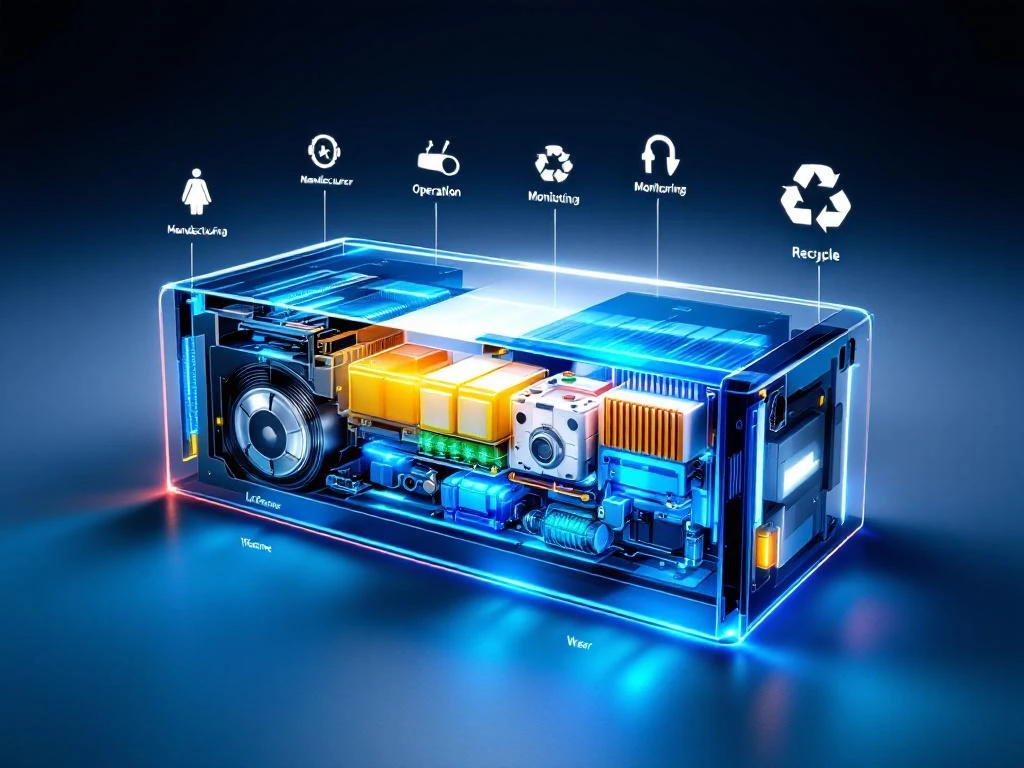
The battery industry has reached a turning point where one-size-fits-all solutions simply don’t work for specialised applications. Whether you’re electrifying construction equipment, powering Formula racing cars, or creating energy storage for marine vessels, standard battery packs often fall short of meeting unique technical requirements. Custom battery systems and modular energy storage have emerged as the answer for companies facing specific challenges that mass-market solutions cannot address.
This shift towards customisation reflects a deeper understanding that different applications demand different approaches. From extreme temperature conditions in construction machinery to space constraints in electric vehicle batteries, the complexity of modern energy storage requirements calls for tailored solutions. Understanding when and why to choose custom over standard options can make the difference between project success and costly compromises.
Why standard battery solutions fail specialised applications
Standard battery packs are designed for volume production and broad market appeal, which inherently limits their flexibility. These off-the-shelf solutions typically follow predetermined voltage configurations, fixed physical dimensions, and standardised cooling methods that may not align with unique application requirements.
Space constraints present one of the most common challenges. Construction equipment manufacturers often discover that standard battery packs don’t fit within existing chassis designs, forcing expensive modifications to accommodate the energy storage system. Similarly, retrofit applications for existing vehicles frequently encounter dimensional mismatches that standard solutions cannot resolve.
Voltage and current requirements create another significant barrier. Many industrial applications require specific electrical characteristics that fall outside standard configurations. Mining equipment operating in extreme conditions, for instance, may need custom voltage levels and current delivery profiles that mass-produced battery solutions simply cannot provide.
Environmental challenges further expose the limitations of standard systems. Applications requiring operation in temperatures exceeding 50°C, high-vibration environments, or corrosive conditions need specialised protection and thermal management that generic solutions lack. Standard battery technology suppliers in the Netherlands often cannot accommodate these demanding specifications.
What makes modular energy storage systems superior
Modular design principles fundamentally change how energy storage systems are conceived and implemented. Rather than fixed configurations, modular systems allow for scalable building blocks that can be combined to meet precise requirements. This approach provides unprecedented flexibility in both initial design and future expansion.
The scalability benefits extend beyond simple capacity increases. Modular energy storage enables manufacturers to start with smaller configurations and expand as needs grow, reducing initial investment whilst maintaining upgrade pathways. This proves particularly valuable for companies transitioning from traditional power sources to electric alternatives.
Maintenance advantages become apparent through the modular approach’s inherent redundancy and accessibility. Individual modules can be serviced or replaced without affecting the entire system, minimising downtime and reducing long-term operational costs. This modularity also simplifies troubleshooting and allows for targeted performance optimisation.
Custom configurations address specific technical requirements that standard solutions cannot meet. Whether dealing with unusual space constraints, specific power delivery profiles, or unique environmental conditions, modular systems can be tailored to exact specifications whilst maintaining proven component reliability.
Key applications driving custom battery demand
Construction machinery represents one of the largest growth sectors for custom lithium batteries. Excavators, mining equipment, and heavy construction vehicles require robust energy storage systems capable of delivering high power whilst withstanding extreme operating conditions. These applications often demand custom voltage configurations and specialised thermal management.
Racing applications push battery technology to its limits, requiring lightweight, high-performance solutions with exceptional power density. Formula racing teams need custom battery systems that maximise performance whilst meeting strict safety regulations and weight restrictions. These demanding applications drive innovation that benefits broader industrial battery pack development.
Maritime equipment presents unique challenges, including corrosive environments, space limitations, and specific electrical requirements. Custom energy storage systems for watercraft must address these conditions whilst providing reliable power for propulsion and onboard systems. The marine sector increasingly demands solutions that standard suppliers cannot provide.
Industrial grid storage applications require scalable systems capable of handling varying load demands and grid integration requirements. These installations often need custom configurations to match specific facility requirements and electrical infrastructure, making modular approaches particularly valuable.
Essential design considerations for custom battery systems
Thermal management stands as perhaps the most critical design consideration for custom battery systems. Different applications generate varying heat loads and operate in diverse environmental conditions, requiring tailored cooling strategies. The choice between passive air cooling and active liquid cooling depends on power density, ambient conditions, and performance requirements.
Safety protocols must be integrated from the earliest design stages, not added as afterthoughts. Custom systems require comprehensive safety analysis considering specific application risks, environmental factors, and operational procedures. This includes protection against thermal runaway, electrical faults, and mechanical damage.
Integration requirements significantly influence design decisions. Custom battery systems must interface seamlessly with existing vehicle or equipment systems, requiring careful consideration of mounting points, electrical connections, and communication protocols. Perfect fit and integration often determine project success more than raw performance specifications.
Environmental conditions shape every aspect of system design. Applications operating in extreme temperatures, high humidity, or corrosive environments need specialised protection and materials. These factors influence everything from cell selection to enclosure design and cooling strategies.
Choosing between air-cooled and liquid-cooled solutions
Air-cooled systems offer simplicity and cost advantages for applications with moderate power requirements and adequate airflow. These lightweight systems work well for compact mobility applications where weight and complexity must be minimised. Air cooling proves particularly effective when ambient temperatures remain reasonable and power cycling is moderate.
Liquid-cooled solutions become necessary for high-power applications or extreme operating conditions. These systems provide superior thermal control and enable higher power density, making them ideal for demanding applications like racing or heavy industrial equipment. The added complexity and cost are justified when performance requirements exceed air-cooling capabilities.
Performance characteristics differ significantly between cooling approaches. Liquid cooling enables more consistent temperatures across the battery pack, improving performance and longevity. Air cooling, whilst simpler, may result in temperature gradients that can affect cell balancing and overall system performance.
Cost implications extend beyond the initial purchase price to include maintenance, complexity, and reliability considerations. Air-cooled systems typically require less maintenance but may have reduced performance in demanding applications. Liquid cooling adds complexity but enables superior performance when properly designed and maintained.
Common mistakes when selecting custom battery providers
Overlooking engineering support represents one of the most costly mistakes companies make when selecting battery suppliers. Custom systems require extensive collaboration during design, prototyping, and testing phases. Providers lacking comprehensive engineering capabilities often deliver solutions that fail to meet real-world requirements.
Underestimating lead times frequently causes project delays and budget overruns. Custom battery development requires time for design optimisation, testing, and validation. Companies often assume custom solutions can be delivered as quickly as standard products, leading to unrealistic project timelines.
Ignoring safety certifications can result in regulatory compliance issues and potential liability concerns. Custom battery systems must meet relevant safety standards for their intended applications. Providers without proper certification capabilities may deliver technically sound solutions that cannot be legally deployed.
Failing to evaluate long-term scalability options limits future growth and adaptation. Companies should consider whether their chosen provider can support volume increases, design modifications, and ongoing technical support throughout the product lifecycle.
The complexity of custom energy storage systems demands careful provider selection and thorough planning. Success depends on choosing partners with proven engineering capabilities, appropriate lead times, and comprehensive support throughout the project lifecycle. For companies ready to explore custom battery solutions tailored to their specific requirements, we invite you to contact our engineering team to discuss your unique application challenges.